Case 02
Strategy
Building a Global Collaborative Design
Ecosystem
Strategy
Context & Problem
Our UX team operates in a multi-PO, multi-UX designer environment, each embedded in different scrum teams and working on multiple topics simultaneously.
While this structure enables parallel progress, it also brings collaboration challenges:
1. Lack of a unified structure for design deliverables.
2. Difficulty maintaining alignment across teams and releases.
3. Inconsistent use of UI elements and behaviors.
4. Delays caused by scattered feedback processes.

Org
Digital Services - Product Engineering
Pilot Project
SiGREEN
My Role / Team
Me - Lead Designer
5 Product Designers
Platforms
Figma
Proposed On
Febraury 2025

Goal
To enable global collaboration across UX teams, improve visibility into ongoing work, and ensure consistent, high-quality design outputs while reducing inefficiencies.
Strategy
I introduced a centralized Figma file management and collaboration process with built-in governance and feedback loops.
Solution
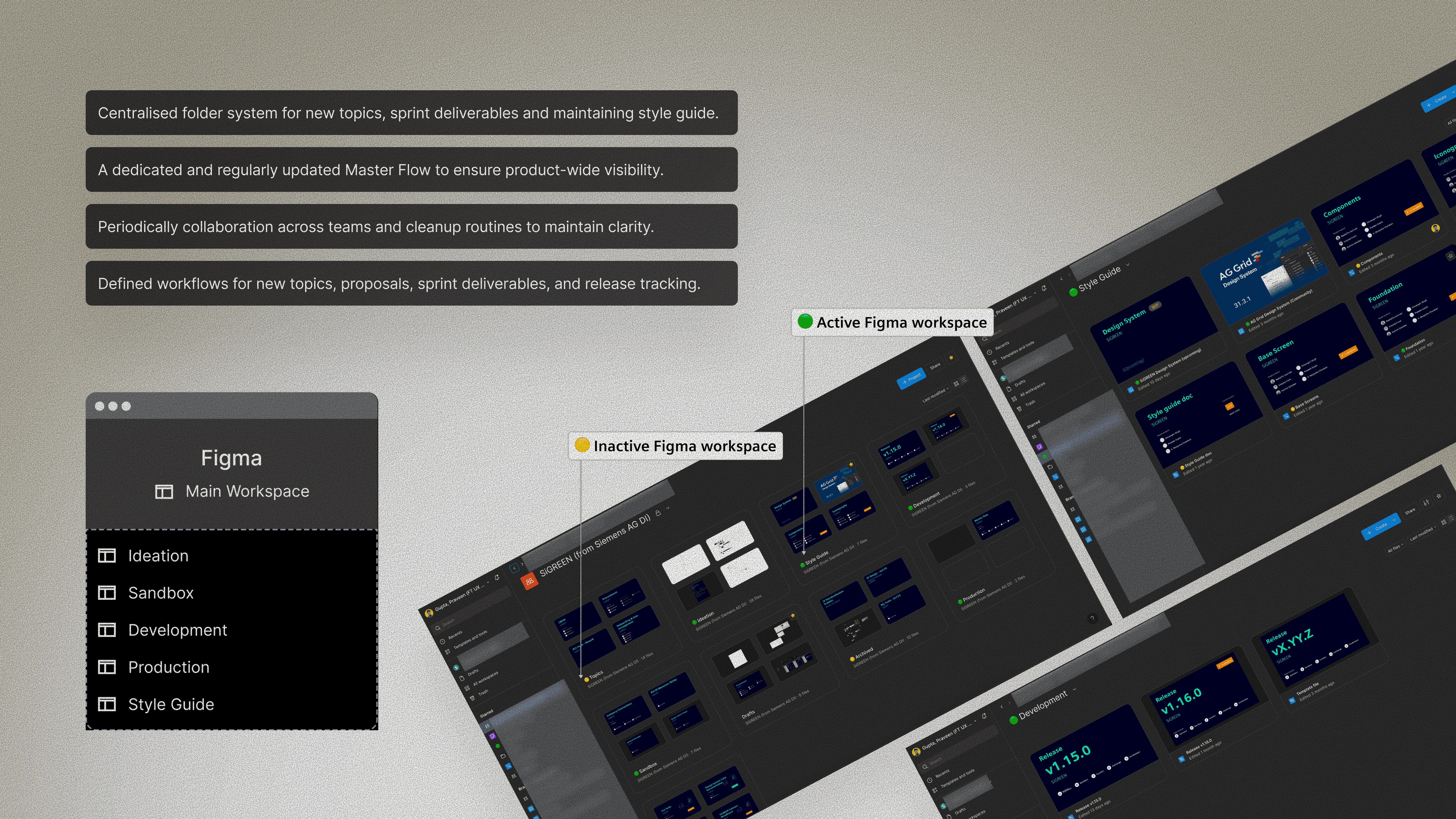
Centralised Structure in Figma
Weekly UX Designer Alignment Calls
Release Documentation
At the end of every sprint/release, teams document what was achieved.
These archives are stored for future reference and to showcase progress.
SPOC for Standardization
A Single Point of Contact ensures all UI components, interaction patterns, and design behaviors remain consistent across products.
Meeting Governance
Every weekly meeting has Minutes of Meeting (MoM) documented for tracking decisions, actions, and follow-ups.
Before

After

Implementation Process
Requirement Gathering & Workshops
Conducted with POs, backend architects, and front-end leads.
Mapping Current Challenges
Identified gaps in collaboration and file management.
Defining Governance Rules
Set clear ownership for updates, versioning, and consistency checks.
Rollout in Phases
Started with sandbox → style guide → production flows.
Continuous Feedback Loops
Weekly sync + monthly UX audits.

Results & Benefits
Better Organization
Faster access to design files and clearer hierarchy.
Stronger Design Quality
Feedback loops ensure decisions are vetted by multiple designers.
Increased Efficiency
Reduced time searching for assets and redoing misaligned designs.
Enhanced Traceability
Every release has documented outcomes and version history.
Scalability
Framework adapts as team size and project complexity grow.
Key Learnings
Early alignment prevents costly redesigns later.
Having a SPOC for standardization greatly reduces inconsistencies.
Regular feedback sessions encourage shared ownership of design quality.